


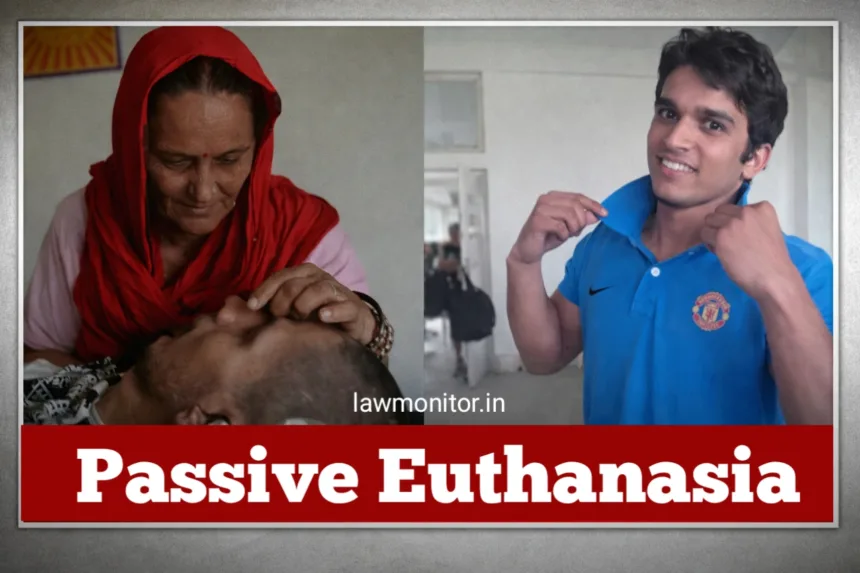
India’s Supreme Court has delivered a landmark verdict allowing the removal of life support for a 31-year-old man who has remained in a vegetative state for more than a decade.
The decision marks one of the rare court-approved cases of passive euthanasia in India, which involves withdrawing or withholding life-sustaining medical treatment. While passive euthanasia was legalized in the country in 2018, active euthanasia—any act intended to directly cause a person’s death—continues to remain illegal.
The case concerns Harish Rana, who suffered severe head injuries in 2013 after falling from the fourth floor of a balcony. Since the accident, he has been in a coma-like condition and has shown no meaningful recovery. Rana had not left a living will or any written instructions regarding his medical treatment before the incident.
For years, Rana’s parents had approached courts seeking permission to withdraw life support for their son. In several interviews with local media, they said that they had spent nearly all their savings on his care and were deeply worried about what would happen to him after their death.
Reacting to the ruling on Wednesday, Rana’s father, Ashok Rana, thanked the Supreme Court for what he described as a “humanitarian” decision. He said that although the choice was extremely difficult for the family, they believed it was in their son’s best interest.
The case has also reignited debate in India over the ethics of passive euthanasia. Some experts argue that such decisions conflict with the principle of self-determination, which forms the basis of a living will.
A living will is a legal document through which individuals aged 18 or above can specify the kind of medical care they wish to receive if they develop a terminal illness or an irreversible condition. For instance, a person may state that they do not want to be placed on life-support machines or may request adequate pain-relief medication.
However, in Rana’s situation, he was unable to express his wishes because he had been in a coma since the accident.
In its observation, the Supreme Court noted that Rana had not responded to treatment and remained completely dependent on others for daily care. The judges stated that although he experiences sleep-wake cycles, he shows no meaningful interaction with his surroundings.
At the time of the accident, Rana was an engineering student at Punjab University in Chandigarh and was living in a paying guest accommodation when he fell from the balcony.
Since then, he has been breathing with the help of a tracheostomy tube and receives nutrition through a gastrostomy tube. According to his parents, he cannot speak, see, hear, or recognize anyone.
In 2024, his parents had approached the Delhi High Court seeking permission for passive euthanasia. The court rejected their plea, stating that Rana was not dependent on life-support machines and could sustain himself without external mechanical assistance.
The family later moved the Supreme Court, but their initial request was also declined.
In 2025, they filed another petition, arguing that their son’s condition had deteriorated significantly and that he was effectively being kept alive through artificial medical support.
The Supreme Court agreed to review the case after two separate medical boards examined Rana’s condition. Both panels concluded that his chances of recovery were negligible and that he would not be able to return to a normal life. They also noted that he requires constant assistance for feeding and other bodily functions.
Doctors further reported that Rana had suffered permanent brain damage and developed severe bed sores due to prolonged immobility.
Under India’s legal framework governing living wills and passive euthanasia, the withdrawal of life support requires certification from two medical boards confirming that the patient meets the necessary conditions.
With Wednesday’s ruling, the Supreme Court has allowed the medical boards to exercise their clinical judgment regarding the withdrawal of treatment in Rana’s case.
