


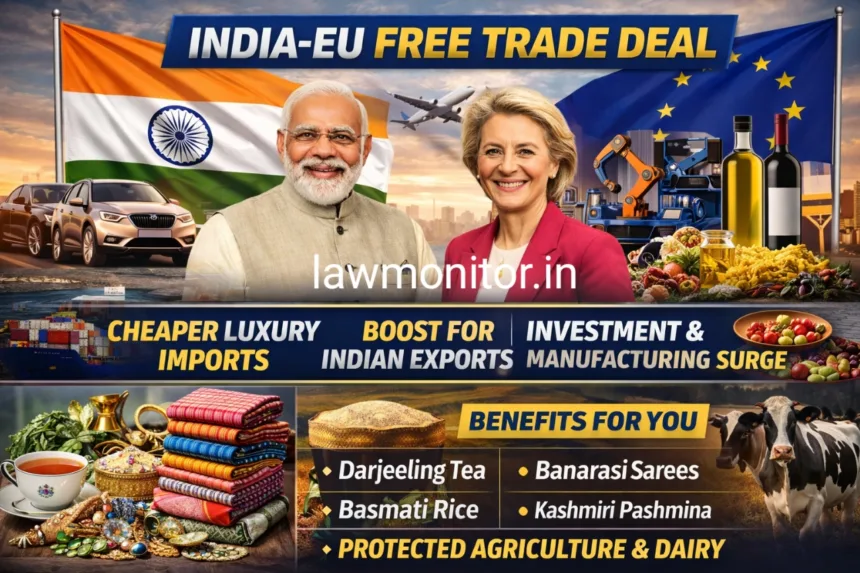
After 18 years of negotiations, India and the European Union (EU) are on the verge of sealing a Free Trade Agreement (FTA) that leaders have described as the “Mother of All Deals.”
Historic Deal Between 28 Economies
The agreement will link India with the EU’s 27 member countries including major economies such as Germany, France, and Italy. Together, this bloc represents one of the world’s largest trading and economic regions.
Direct Benefits to Consumers
the deal will make several imported products cheaper and more accessible in India:
Luxury cars — Brands like BMW, Audi, and Mercedes could become more affordable as duties are reduced.
European wine and spirits — Taxes on these premium imports may be cut, lowering retail prices.
High-tech electronics and machinery — Equipment and components from Europe are expected to see tariff reductions, potentially lowering costs for manufacturers and consumers.
Boost for Indian Exports
The agreement is expected to give a major push to Indian industries that export goods to Europe:
Textiles and footwear — Reduced or zero tariffs could make Indian products more competitive against exports from Bangladesh and Vietnam.
Gems, jewellery, and leather goods — Easier access to EU markets may expand demand.
Pharmaceuticals — India could see a substantial rise in pharmaceutical exports if regulatory alignment improves.
Safeguards for Sensitive Sectors
To protect domestic producers, India has kept its agricultural and dairy sectors outside the scope of this trade deal, ensuring they are not exposed to cheaper EU imports.
GI Tag Protection for Indian Heritage Goods
The FTA will also strengthen Geographical Indications (GI) protections for Indian products like Darjeeling tea, Banarasi sarees, Basmati rice, and Kashmiri Pashmina, helping them maintain brand value and authenticity in EU markets.
Broader Economic and Strategic Impact
Diversifying exports: With the U.S. raising tariffs on many Indian products, the EU deal offers a major alternative market.
Investment boost: EU firms are likely to invest more in India, especially in electronics, automobiles, health care, and green technologies.
Manufacturing hub potential: The deal could help position India as a key global manufacturing base, strengthening its role in international supply chains.
Why This Deal Matters
Analysts say the India-EU FTA is not just about tariffs — it’s about reshaping trade relationships, diversifying supply chains, and opening doors for Indian businesses and workers in global markets.
Read Also: Historic India-EU Trade Deal
